Lap An lagoon at dawn
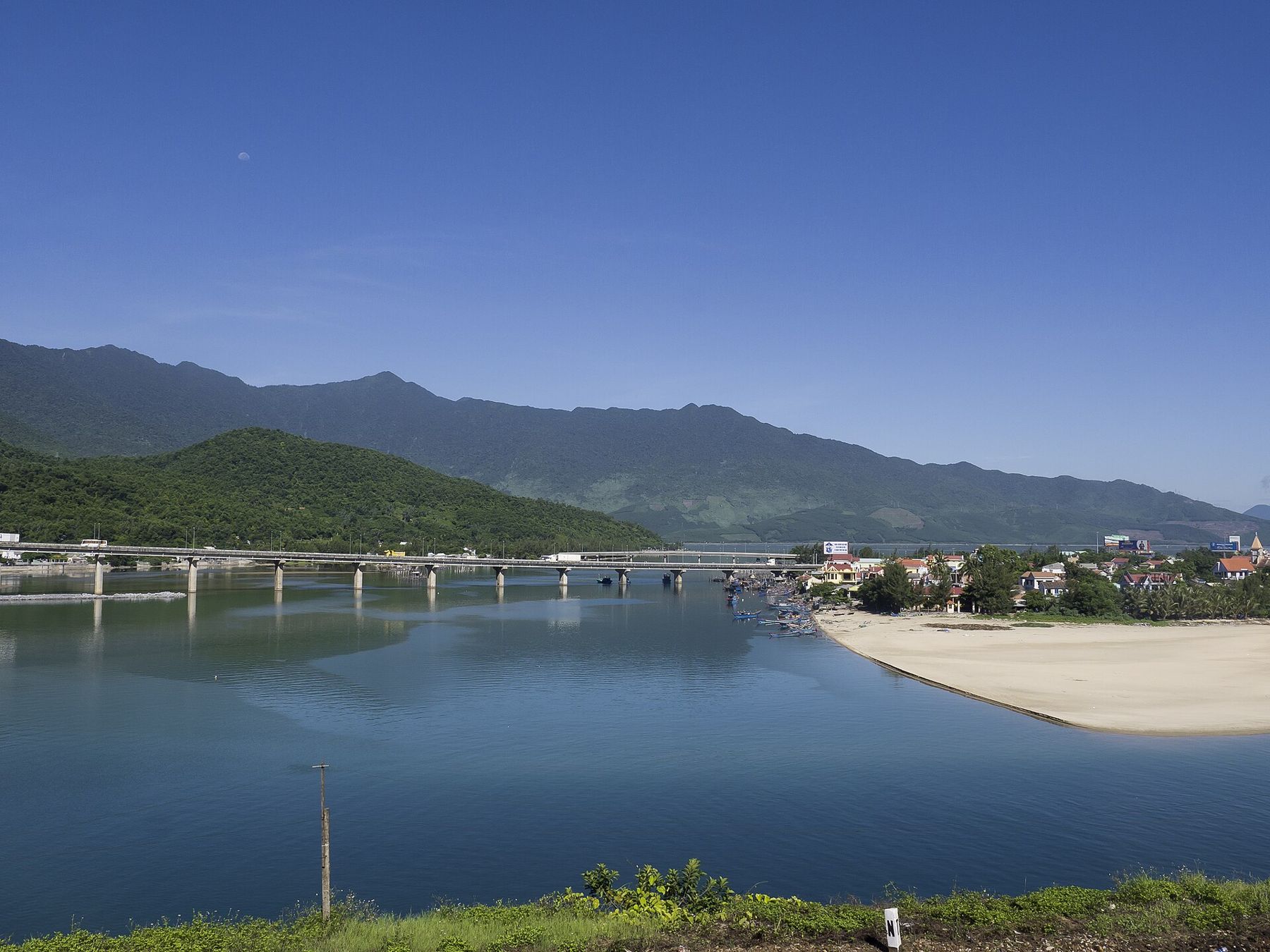
Behind the beach at Lang Co, a wide, shallow lagoon lies still under the mountains. At first light its surface turns into a mirror, broken only by oyster stakes and small boats.
i
Edgardo W. Olivera from Montevideo, Uruguay · CC BY 2.0- From the old town
- About 92 km
- The water
- Calm
- Best months
- March to August
- Getting there
- The lagoon road at Lang Co
Lang Co's beach faces the open sea, but its other face is just as memorable. Behind the town, the Lap An lagoon spreads across a broad, shallow basin ringed by mountains, connected to the sea by a narrow channel. The water is calm almost all the time, and in the still air of dawn or dusk it reflects the green ridges and the sky so perfectly that photographers come from far away to stand on its shore.
The lagoon lies about 92 km by road from Hoi An's old town, on the north side of the Hai Van Pass.
A working lagoon
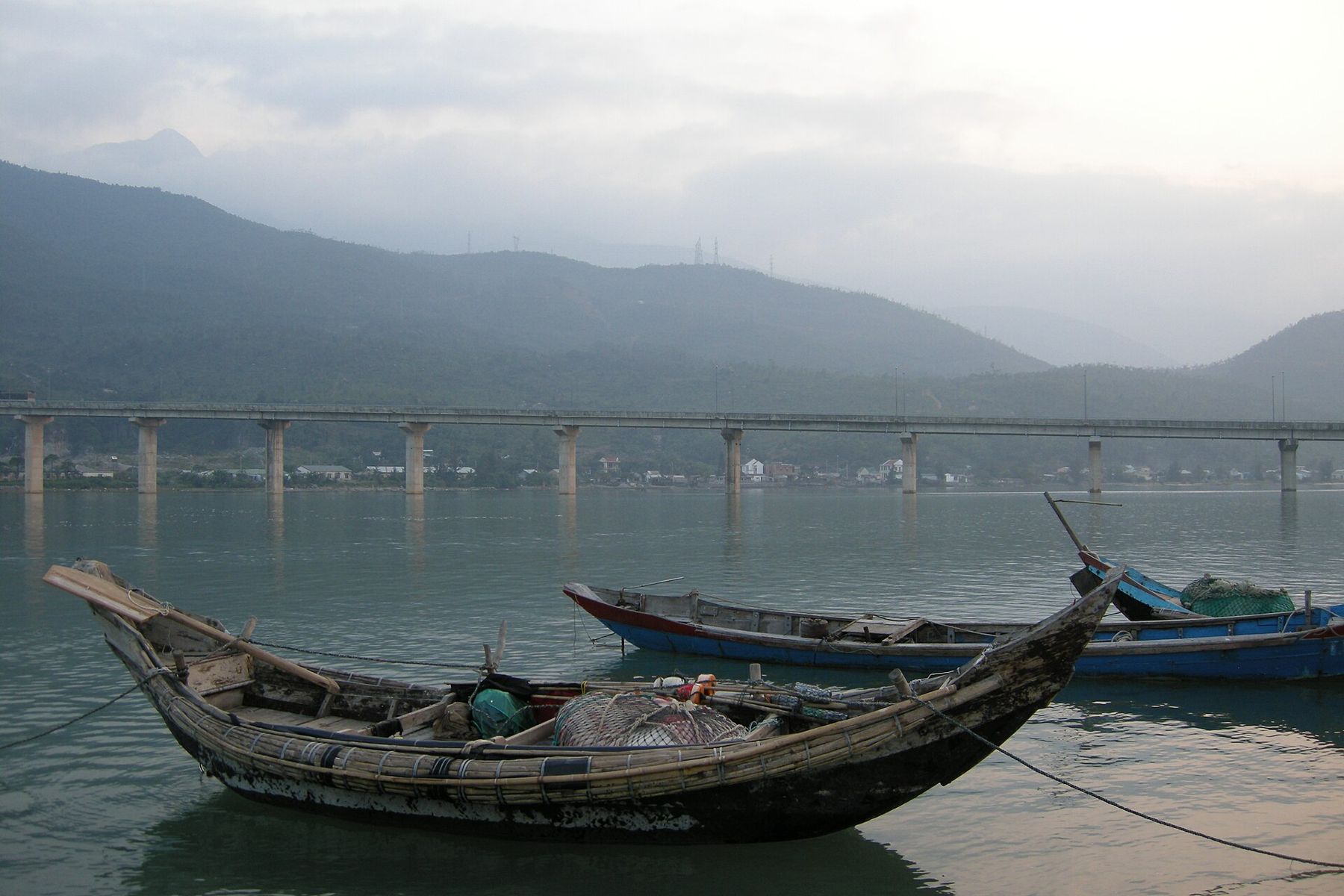
The lagoon is not a park but a place of work. Its shallow, brackish water is ideal for oysters, and much of it is dotted with the stakes and frames of oyster farms. Fishermen work from small boats and from bamboo platforms, and nets are strung across parts of the water. Clams, shrimp and fish are also harvested here. In the morning, you may see people wading in the shallows to tend their beds or collect shellfish.
i
Vyacheslav Argenberg · CC BY 4.0Respect the work going on: do not walk onto the oyster beds or interfere with nets and frames, and ask before photographing people at close range.
The road around the water
A road runs along the edge of the lagoon, between the water and the foot of the mountains, giving views across to the town and the spit. It is popular with cyclists, walkers and photographers, especially in the early morning. Parts of it are quiet, with little traffic; others carry vehicles to the villages and the tunnel road. Keep to the side and watch for motorbikes.
Along the road, small piers and viewpoints look out over the water. In the late afternoon, the sun sets behind the mountains on the far side, and the water turns gold and then pink.
Dawn and dusk
The best times to see the lagoon are the first and last hours of daylight. At dawn, before the wind gets up, the surface is often perfectly still. Mist sometimes lies on the water and around the feet of the mountains. Boats glide out to the oyster beds, and the reflections of the peaks are sharp.
At dusk, the light comes from behind the mountains, and the lagoon glows. This is also the time when families come out to walk and fish along the shore, and the atmosphere is relaxed and friendly.
Oysters on the table
Oysters from the lagoon are a local speciality, in general terms, served grilled with spring onion and peanuts, or fresh. Seafood places line parts of the lagoon shore and the road through town. As always with shellfish, choose places that are busy, where turnover is high, and where the food is cooked fresh. If you are unsure about raw oysters, choose them grilled.
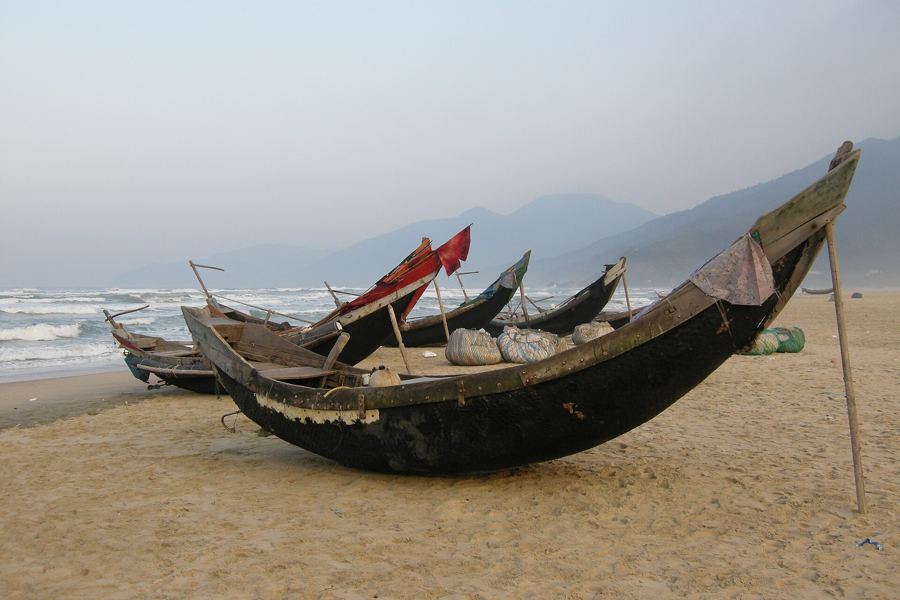
For photographers, the classic view is from the low hills on the lagoon road, looking back over the water to the spit and the mountains, with oyster stakes and boats in the foreground. Give the lagoon an unhurried hour: the changing light and the slow work of the oyster farmers are best appreciated at a walking pace.
Mornings are cooler here than on the open beach, and a light layer is welcome at dawn.
Seasons on the lagoon
The lagoon is calm through most of the year, but its surroundings change with the seasons. In the dry, calm months from roughly spring to summer, mornings are clear and the reflections are at their best. In the rainy season, from about September into the early winter, heavy rain and cloud can sit over the mountains for days, and the lagoon turns grey and wind-ruffled. Floods sometimes affect the low-lying roads around the water. Check local conditions in the rainy months.
The lagoon is also a lesson in how this coast is built. Sand carried along the shore by the currents has formed the spit that separates it from the sea, leaving a sheltered basin behind where river water and seawater mix. The channel at its mouth, crossed by a bridge on the road north, is where the tide moves in and out, and fishermen gather there with nets at the turn of the tide. Brackish lagoons like this are among the most productive waters on the coast, which is why so many families make their living from them.
Birdlife is part of the scene too: egrets and herons stalk the shallows, kingfishers perch on the stakes, and in the cooler months migrating waders stop to feed on the mudflats at the edges.
Combining lagoon and beach
The joy of Lang Co is having both sides within a few minutes' walk: the open sea for swimming in the morning, the still lagoon for the sunset. A short stay can easily include both, and a walk or cycle around part of the lagoon road makes a good half-day. The beach side is described in Lang Co: a sand spit between lagoon and sea, and the dramatic road over the mountains to the south in over the Hai Van Pass.
From the lagoon, the Bach Ma mountains rise to the west, a national park of forest, waterfalls and old hill-station ruins, reached by a road inland. It makes a cool day trip in the hot months, and a reminder of how close the mountains come to the sand on this coast.