Son Tra peninsula: coves under the forest
North-east of Da Nang, a forested mountain juts into the sea, ringed by small coves, watched over by a giant white statue, and home to some of the rarest monkeys in Asia.
i
CEphoto, Uwe Aranas · CC BY-SA 3.0- From the old town
- About 35 km
- The water
- Varies by season
- Best months
- March to August
- Getting there
- Coast road north-east from Da Nang
From any beach in Da Nang, look north-east and you will see it: a long, green mountain rising straight from the sea at the end of the city's sweep of sand. This is the Son Tra peninsula, a forested headland of around 600 m that shelters Da Nang Bay from the open sea. Its slopes are covered in forest, much of it protected, and around its foot lie small coves and beaches that feel a world away from the city, though they are only a short ride from it.
Son Tra lies about 35 km by road from Hoi An's old town.
Roads around the peninsula
A road runs around much of the peninsula, from the city side along the southern shore to the eastern tip, with branches climbing into the forest. It is a beautiful ride, with the sea on one side and the forest on the other, and viewpoints over the bay and the city. Parts of the road are steep and winding, and some sections in the higher forest may be closed or restricted; check locally. Motorbikes and cars share the road with cyclists, so take the bends carefully.
i
Fa2f · CC BY 3.0The coves
The beaches of Son Tra are small and varied: coves of coarse golden sand between rocky headlands, some with clear water and rocks to snorkel around, others with small fishing communities. The coves on the southern, bay side are generally more sheltered than the open coast to the east, and in the calm months the water can be clear and still. Bai But, on the southern shore, is one of the best known, with a small beach facing the city across the bay.
Facilities vary from cove to cove, in general terms, and many have none. Lifeguards are rare. Swim only in calm conditions, stay close to shore, and take care around the rocks, which can be sharp and slippery.
The pagoda and the statue
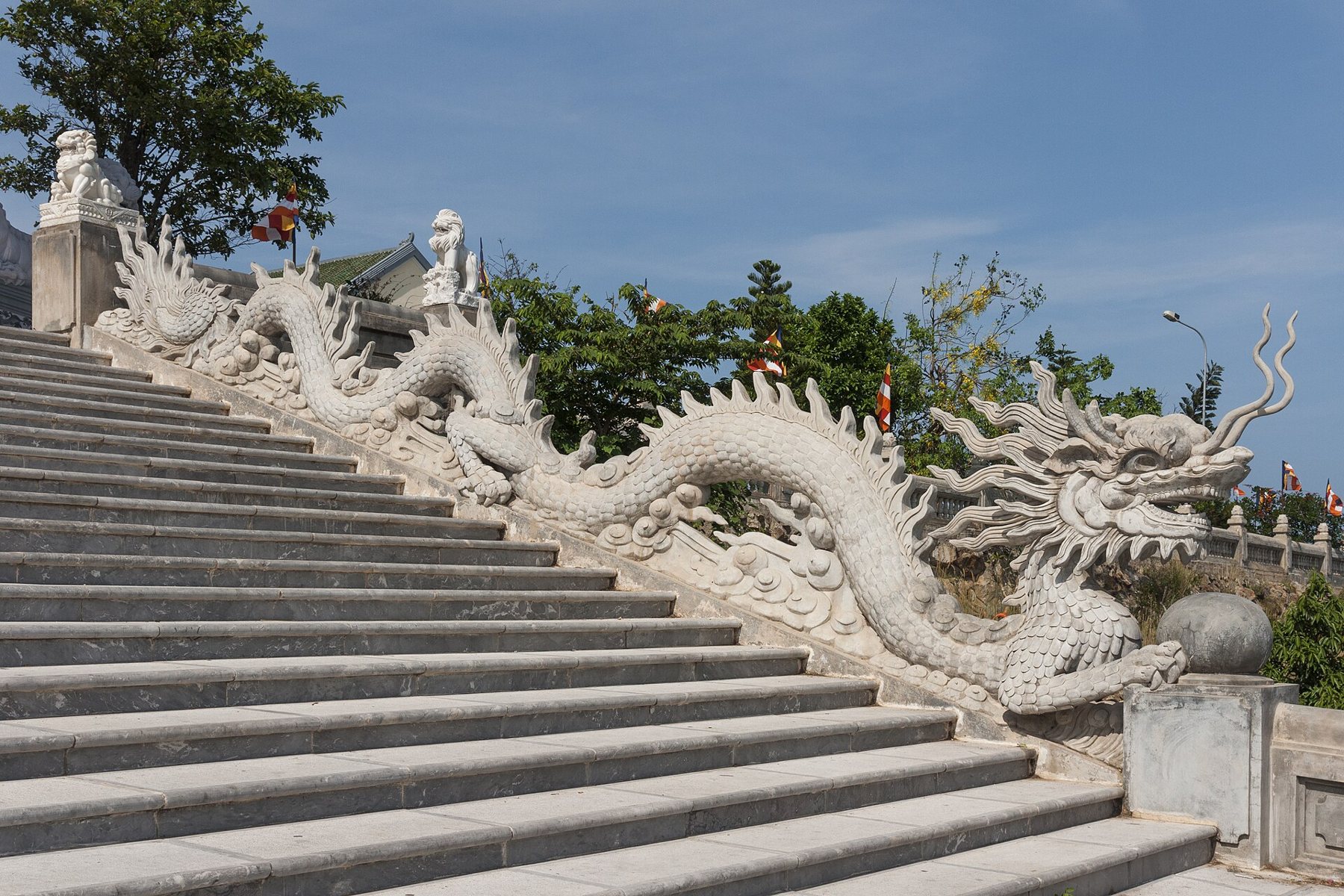
On the southern slopes of the peninsula, the Linh Ung pagoda complex looks out over the bay, crowned by a huge white statue of the bodhisattva of compassion, Quan Am, which can be seen from much of the city. The pagoda grounds include temples, gardens and statues of arhats, and the views over the bay to the city and the distant mountains are wide. It is a working place of worship, so dress modestly, speak quietly and follow any signs.
Lifeguards are rare.
The douc langurs
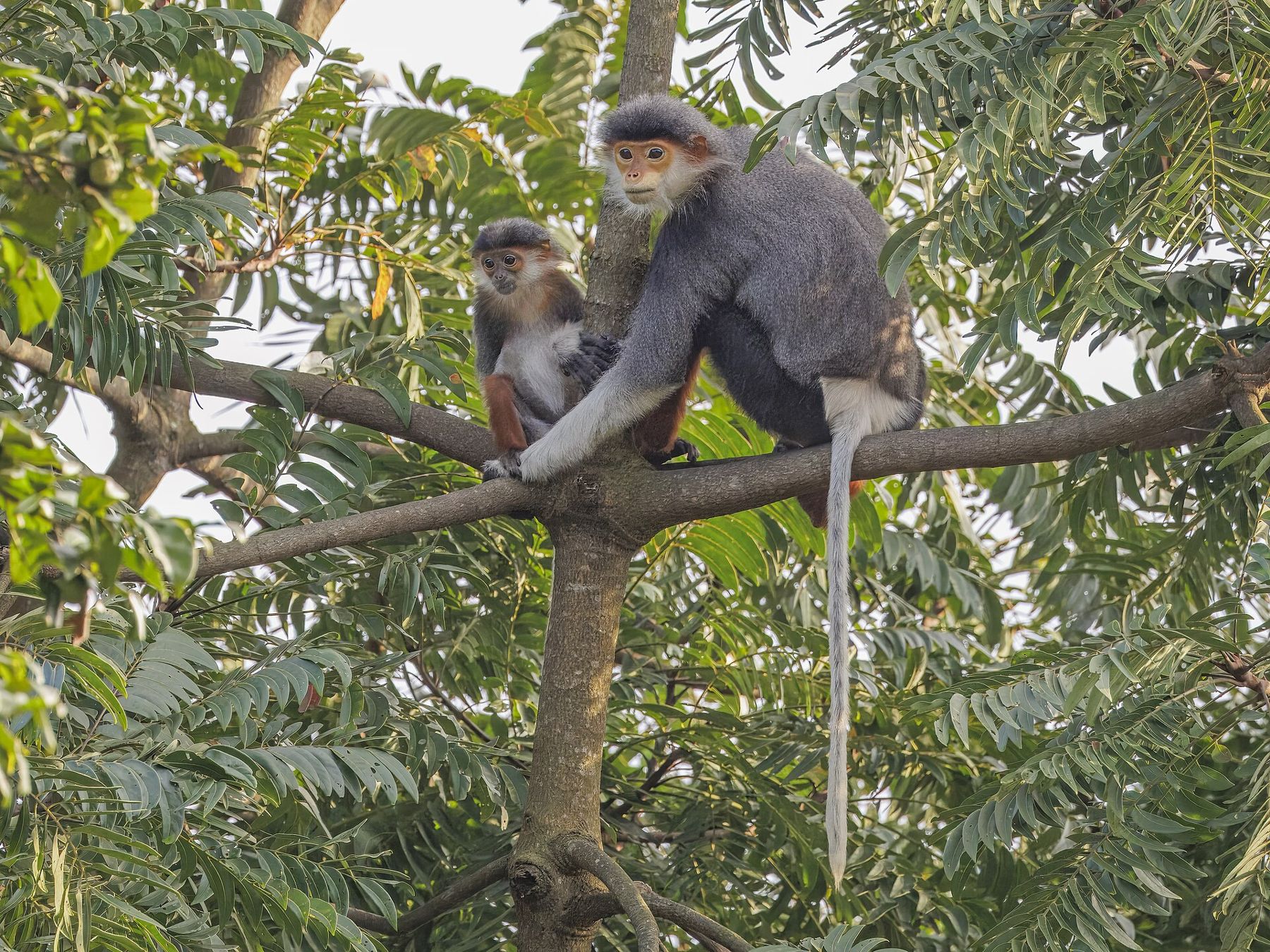
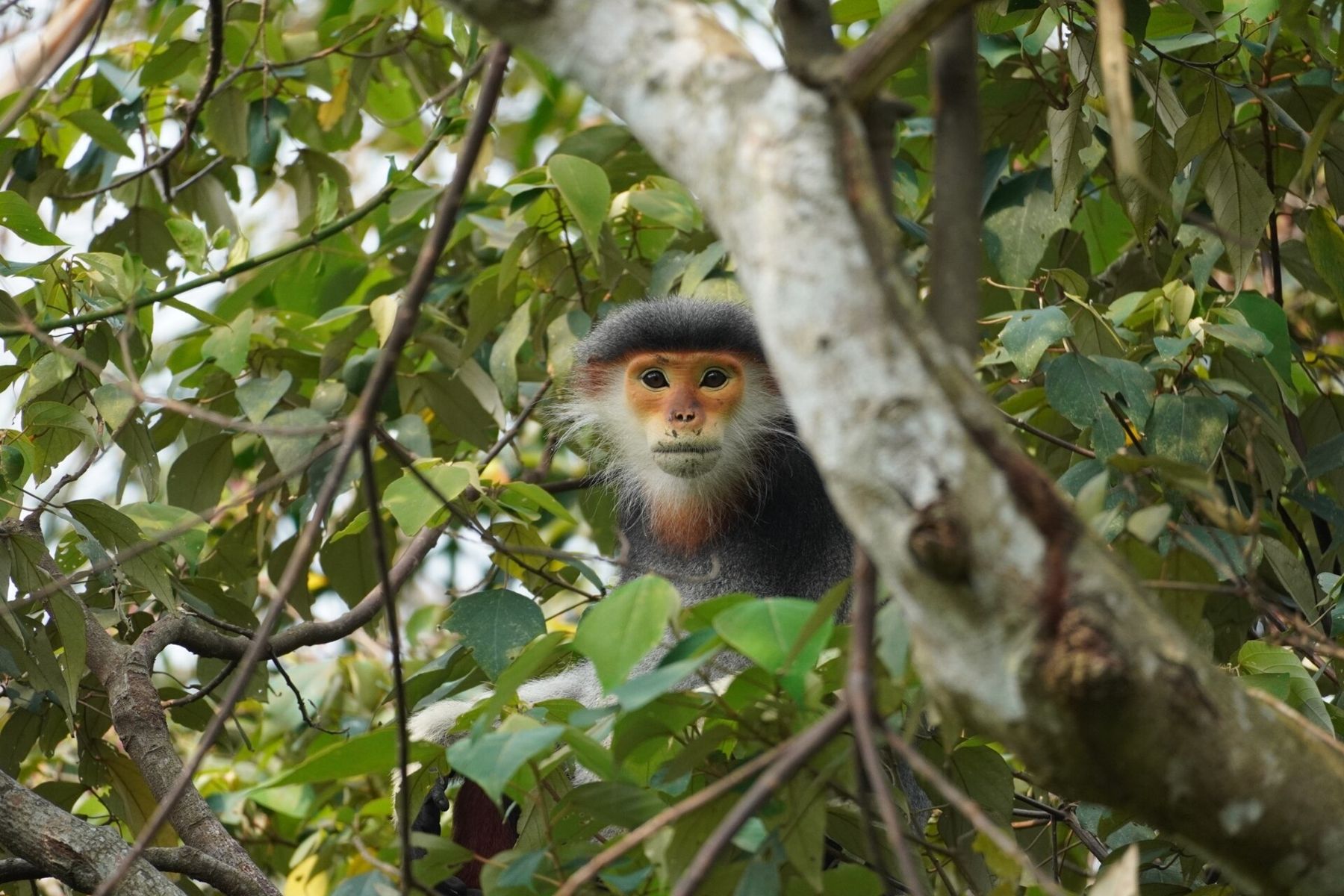
The forests of Son Tra are home to the red-shanked douc langur, a strikingly colourful monkey with a grey body, white forearms, maroon-red lower legs, a black and white face with a golden ring, and a long white tail. It is an endangered species, and Son Tra holds one of the most important populations. Seeing them in the treetops, especially in the early morning, is one of the great wildlife experiences of central Vietnam.
To give yourself the best chance, go early, drive or ride slowly on the forest roads, and look for movement in the canopy. Keep a respectful distance, never feed them, and never try to approach. Binoculars help.
i
Charles J. Sharp · CC BY-SA 4.0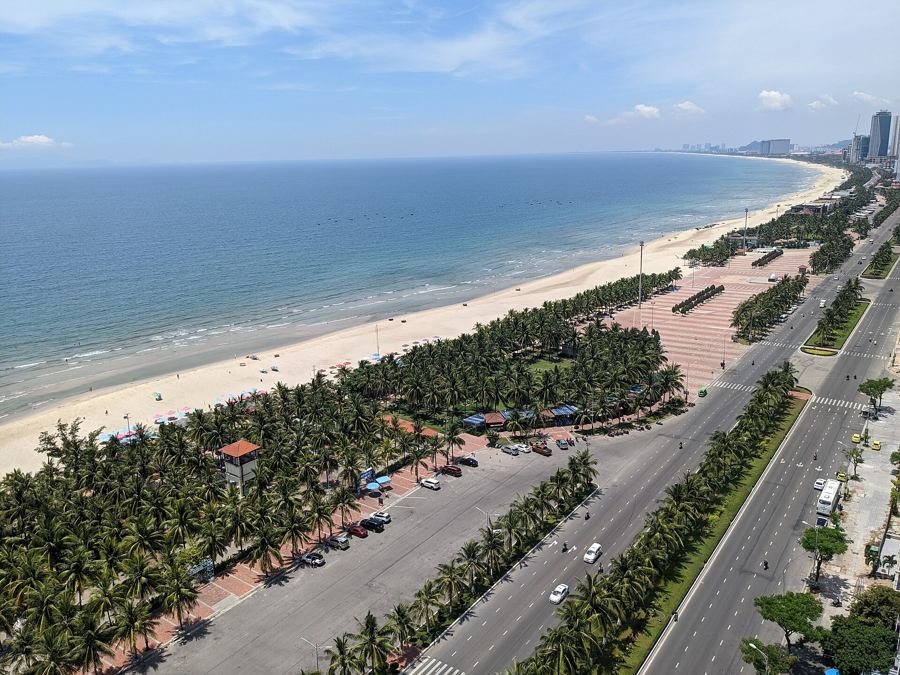
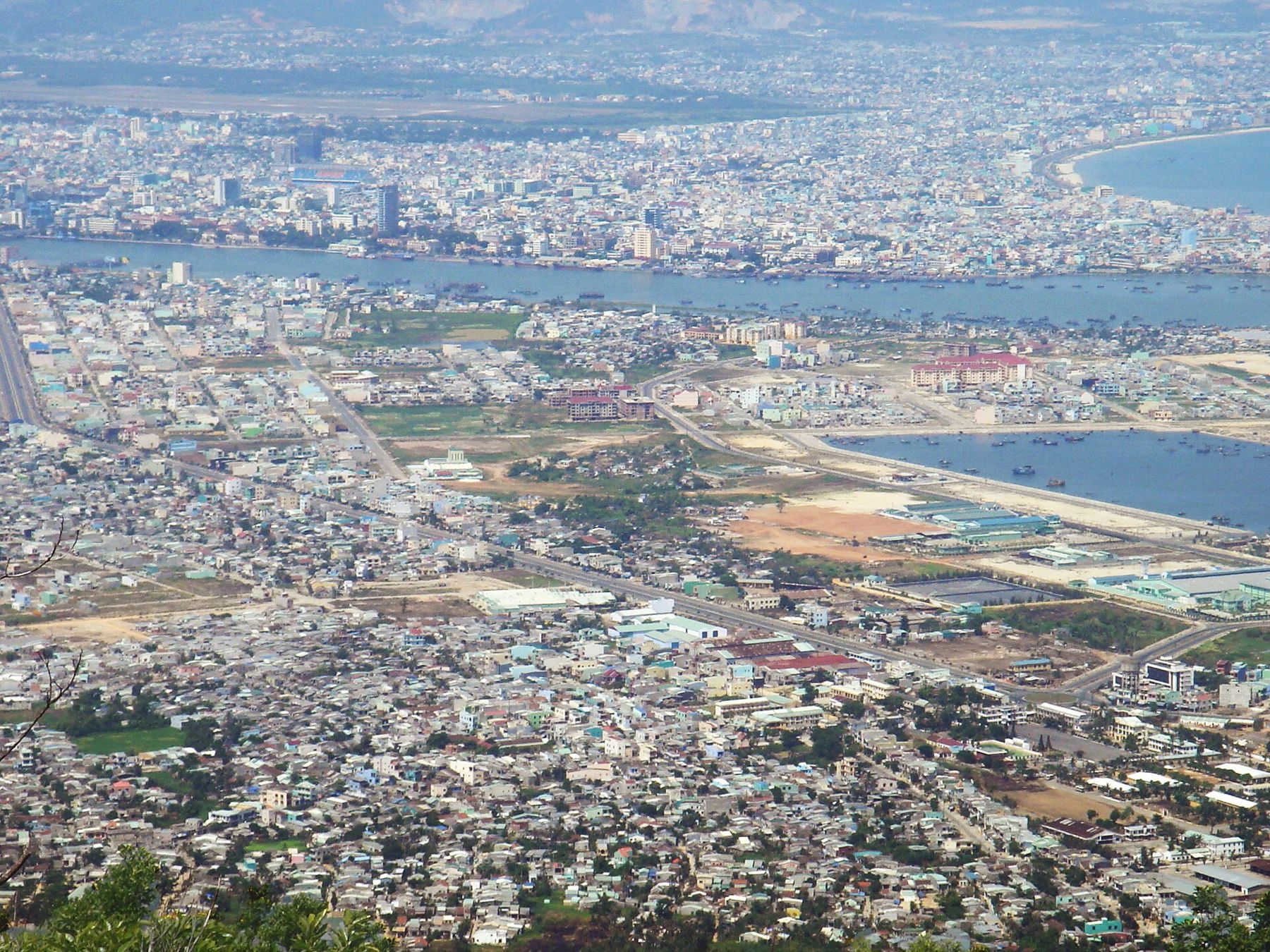
The bay side of the peninsula also gives the best views back towards the city: the long curve of the beaches, the bridges over the Han River and, on clear days, the mountains of the Hai Van Pass across the water. Late afternoon light is particularly good from the viewpoints on the southern road, with the city turning gold below. At night, the lights of Da Nang spread out along the shore, and the peninsula's dark mass rises behind, a reminder of how close wild forest lies to a city of a million people.
The peninsula is also a very good place from which to sit and watch the city's fishing boats come and go from the harbour on its southern side, and in the evening the lights of the squid boats twinkle out on the dark water of the bay.
Calm water and rough water
Son Tra's coves are at their best from roughly spring to late summer, when the sea is usually calm and clear. From about September into the early winter, the north-east monsoon brings rough seas, wind and rain, and the eastern coves in particular take the full force of the swell. Typhoons can strike the coast in the autumn. In those months, the forest roads can also be wet and affected by landslides. The pattern across the whole coast is explained in calm water and rough water.
The peninsula played a role in the city's history as a lookout and a military base, and parts of it remain restricted. Its forest, once threatened by logging and later by development, is now largely protected as a nature reserve, and conservation groups have campaigned to keep it that way. Besides the langurs, the forest holds macaques, many birds, and reptiles. Around the coast, the rocks and reefs at the foot of the cliffs shelter fish, and in calm water snorkellers sometimes find more than they expect.
Sunrise is the best time on the peninsula. The light comes up over the open sea to the east, the city wakes up below, and the forest is alive with birdsong. By mid-morning, tour vehicles begin to arrive at the pagoda, and the roads get busier.
Plan on at least half a day, ideally a whole cool morning starting at sunrise, for a loop of the peninsula with stops at the pagoda, a cove and a viewpoint. Fuel up in the city before you set off, since there is nowhere to fill up on the mountain, and carry water and snacks.
Staying near Son Tra
Places to stay near Son Tra range, in general terms, from city hotels along the beaches below the peninsula to a few properties in the coves themselves. Staying at the foot of the peninsula puts the coves, the pagoda and the forest within easy reach, while keeping the city's beaches and restaurants close. For a beach right in front of the city, the long sweep of My Khe begins just south of the peninsula.
i
Chris Oldnall · CC BY-SA 4.0Son Tra is a protected area as well as a playground, and the forest has been under pressure from development and traffic. Stay on the roads and marked paths, take all rubbish away, and keep noise down. The langurs and the forest will still be there for the next visitor if everyone does the same.