Non Nuoc beach and the Marble Mountains
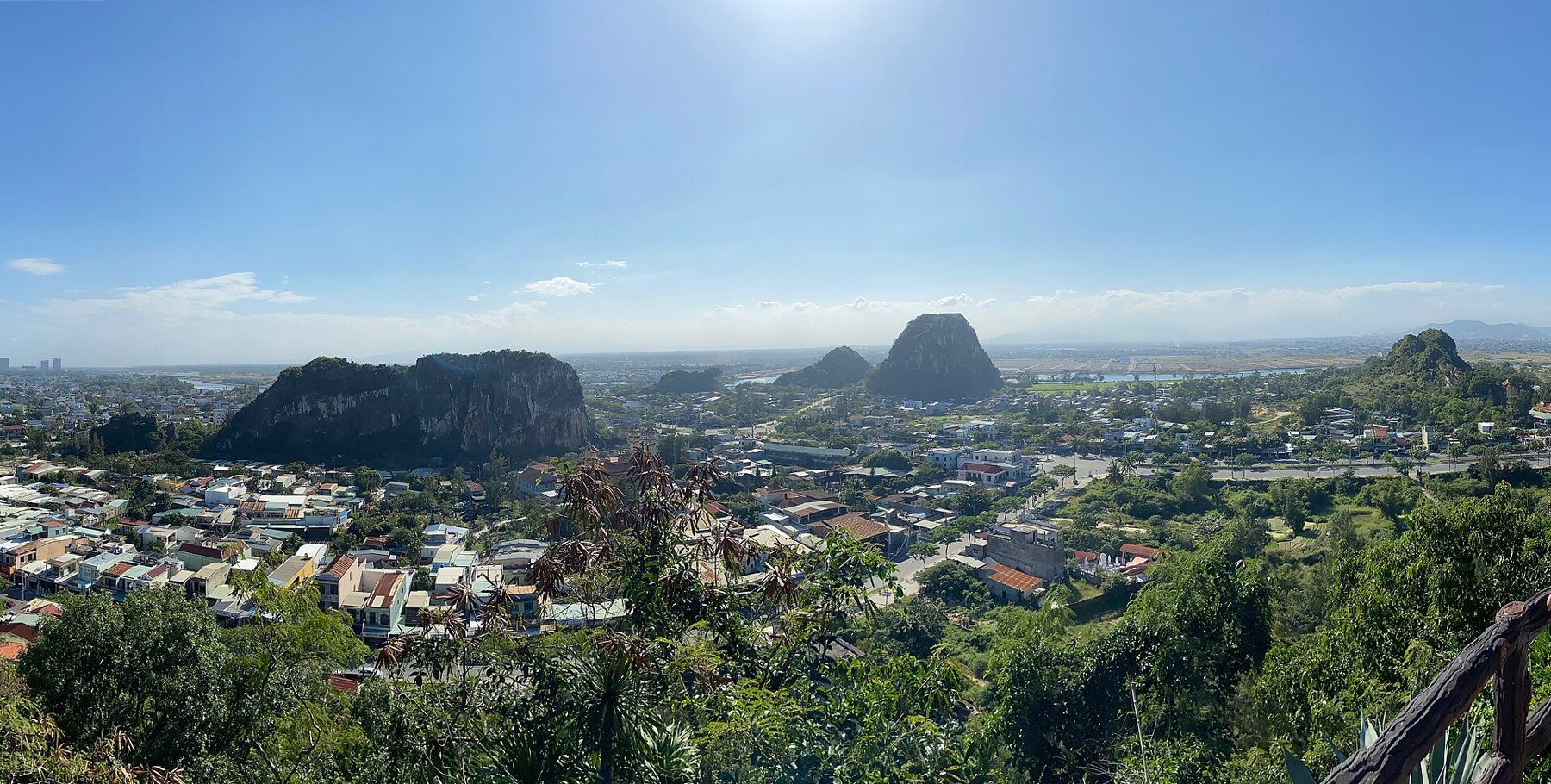
Halfway between Da Nang and Hoi An, five limestone hills rise from the coastal plain, riddled with caves and pagodas, a short walk from a long, open beach.
i
Kuroczynski · CC BY-SA 4.0- From the old town
- About 18 km
- The water
- Varies by season
- Best months
- March to August
- Getting there
- Coast road between Da Nang and Hoi An
South of Da Nang, the coastal road runs along a long, straight beach backed by casuarina trees, with a strange cluster of steep limestone hills rising just inland. These are the Marble Mountains, five outcrops named after the five elements, and the beach below them is Non Nuoc. Together they make one of the most varied stops on the coast: a morning climbing through caves and pagodas, an afternoon on the sand.
Non Nuoc lies about 18 km by road from Hoi An's old town, roughly halfway to Da Nang.
The beach
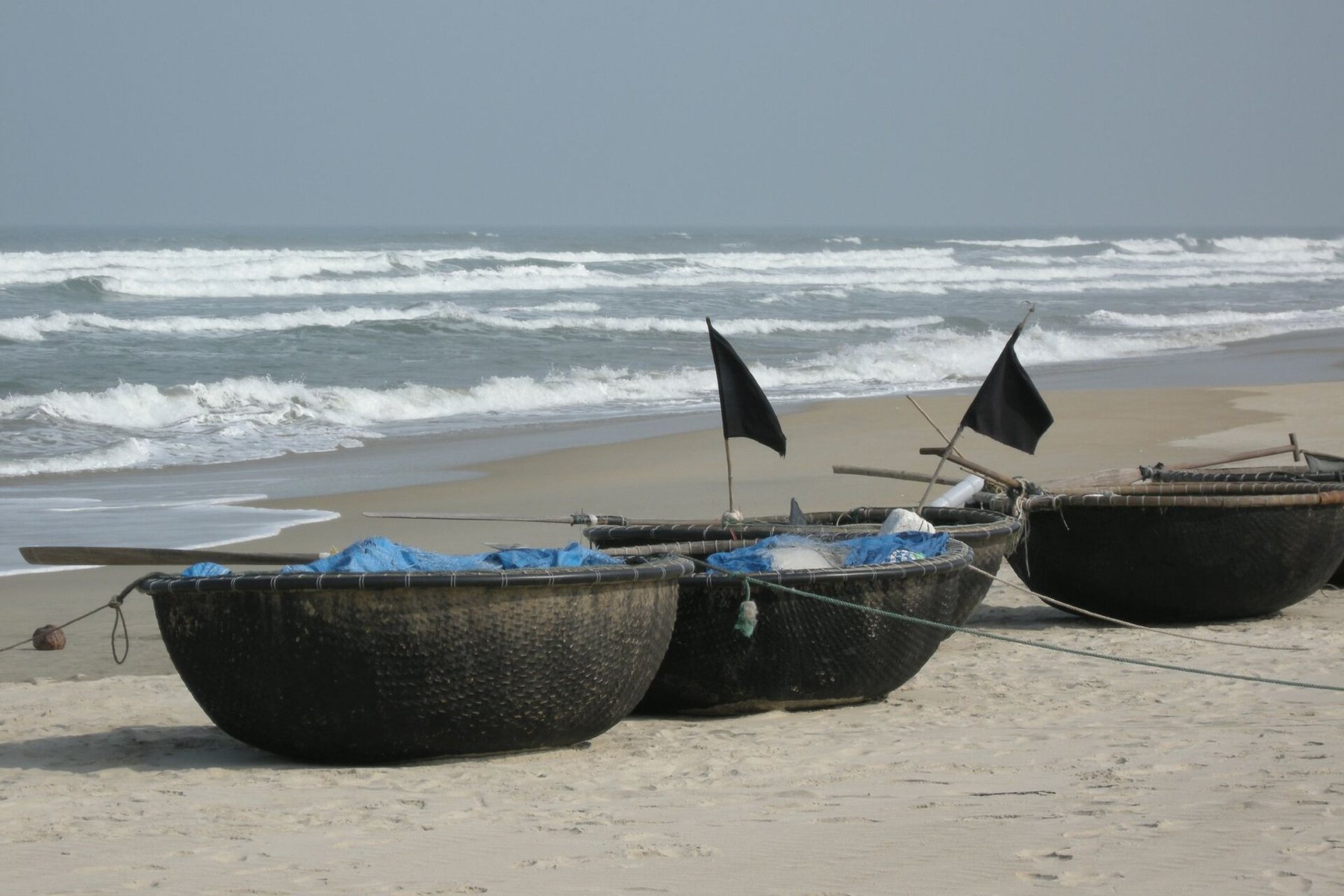
Non Nuoc beach is part of the long sweep of sand that runs from Da Nang towards Hoi An. It is wide, open and less crowded than the city beaches further north, with fine pale sand and basket boats drawn up in rows. The sea here faces east into the open water, and in the calm months it is good for swimming, while in the rough months it can be wild.
i
Vyacheslav Argenberg · CC BY 2.0Large resorts occupy parts of the beachfront, in general terms, but public access points lead to the sand, and long stretches remain open and quiet. Lifeguards and flags are present on some stretches; elsewhere, swim with caution.
The Marble Mountains
The Marble Mountains, Ngu Hanh Son in Vietnamese, are five limestone and marble hills rising abruptly from the flat land between the beach and the river. The largest, Thuy Son, the Water Mountain, is open to visitors, with stairways and a lift leading up to a network of caves, grottoes, pagodas and viewpoints.
Inside the caves, Buddhist shrines and statues have been placed in the rock, lit by shafts of light from openings above. Huyen Khong cave, the largest, is a vast chamber with altars and incense smoke drifting in the light. From the viewpoints at the top, the views stretch along the coast to Son Tra in the north and towards Hoi An in the south.
The climb involves many steps, some steep and uneven, and the caves can be slippery. Wear good shoes, bring water, and dress modestly, as these are active places of worship. Entry has been by ticket, and the site is busy with tour groups from mid-morning; go early.
The stone-carving village
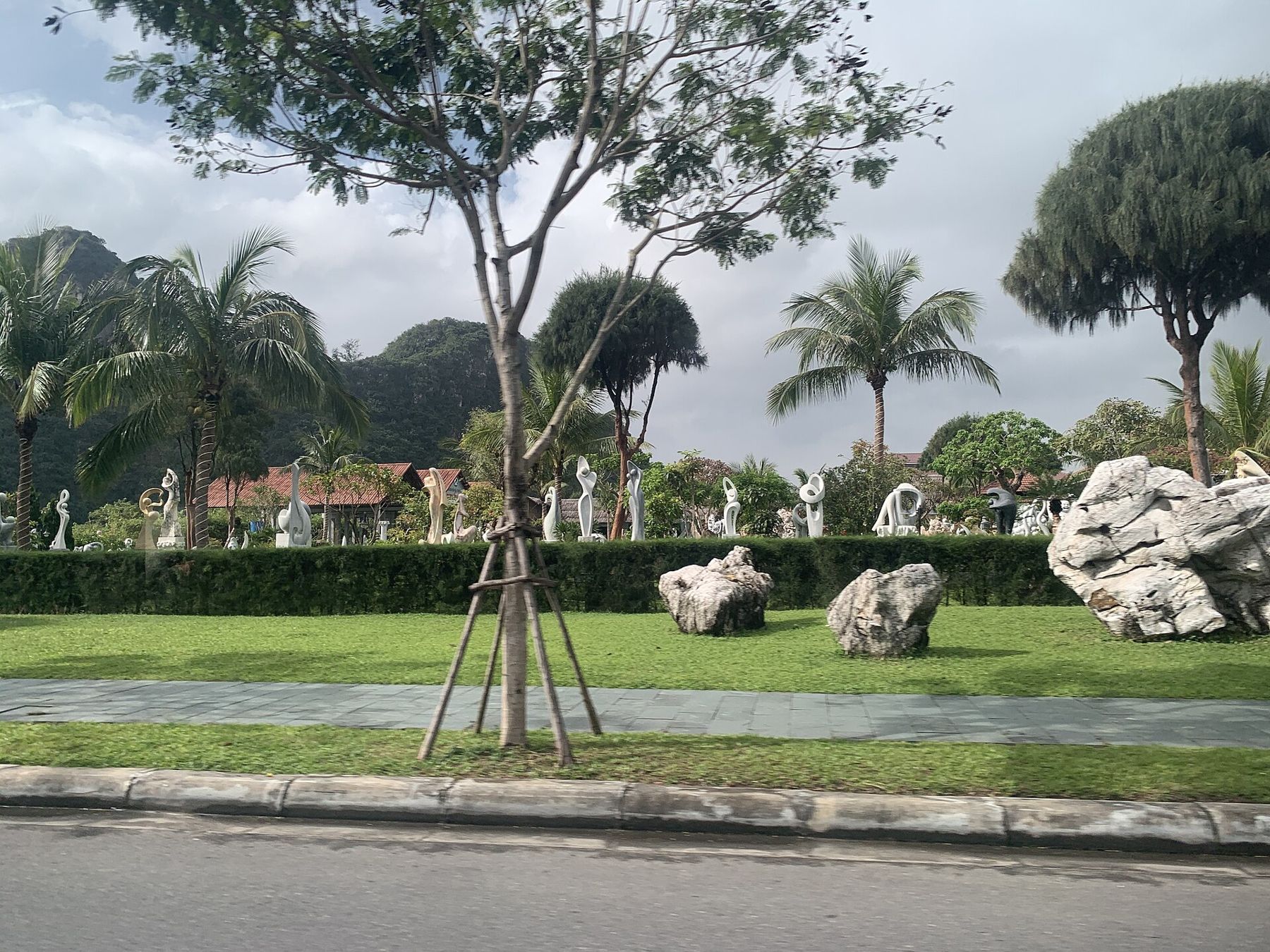
At the foot of the mountains, the village of Non Nuoc has long been known for stone carving. Workshops line the roads, with statues of every size, from small figures to giant lions and Buddhas, carved from marble and other stone. Much of the stone is now brought from elsewhere, since quarrying in the mountains themselves was stopped to protect them. Watching the carvers at work is interesting; if you are tempted to buy, take your time and check how anything large would be shipped home.
The climb involves many steps, some steep and uneven, and the caves can be slippery.
i
Martin Lewison from Forest Hills, NY, U.S.A · CC BY 2.0Combining mountains and sand
The best plan is to visit the Marble Mountains in the early morning, before the heat and the crowds, and then head to the beach for the rest of the day. The distances are short: the beach is only a few minutes from the mountains by bicycle or taxi. In the late afternoon, the light on the hills from the beach is lovely.
Non Nuoc also sits on the coast road between Da Nang and Hoi An, which makes it a natural stop on the journey between the two. Cycling the coast road from Hoi An to Non Nuoc and back is a good day out in the cooler months.
i
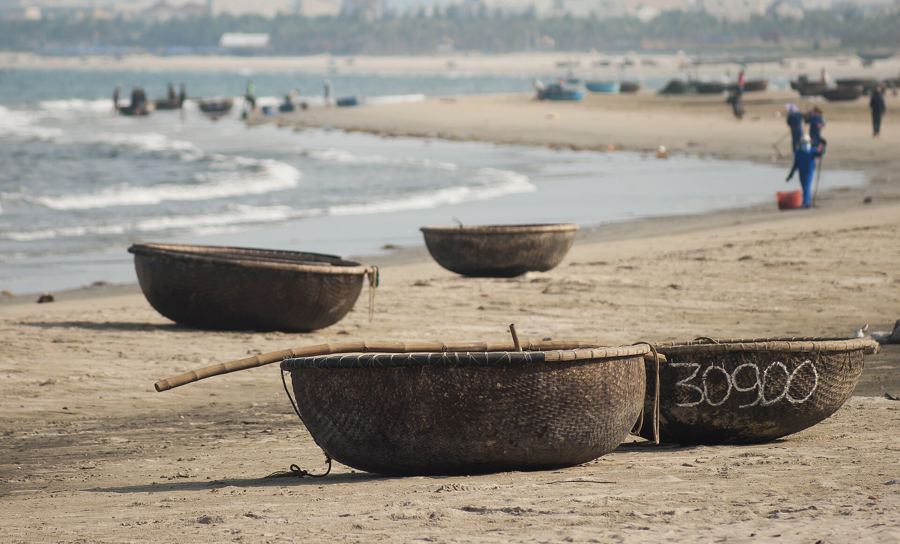
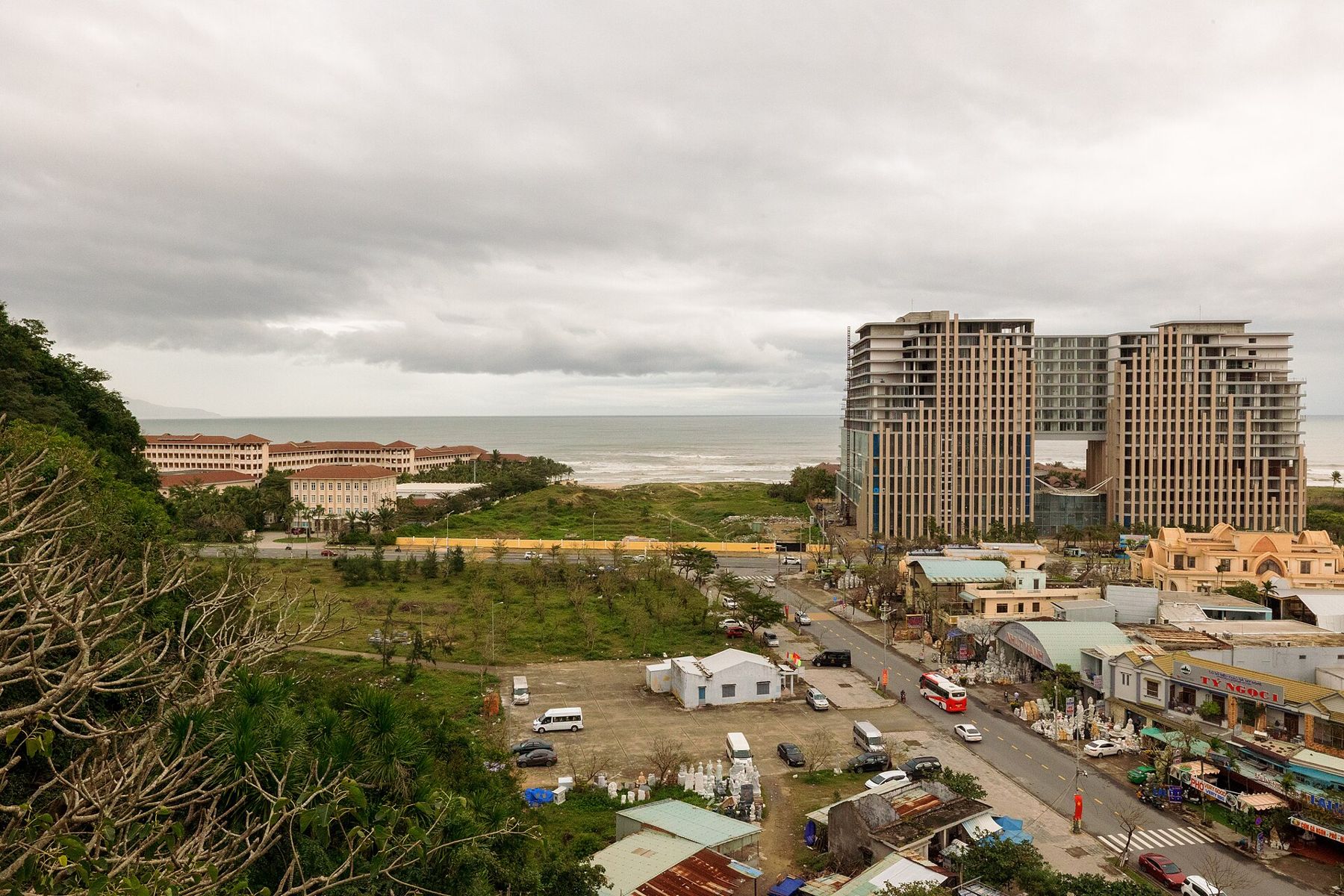
Kevin Rutherford from United States · CC BY-SA 2.0The beach and the mountains are linked by more than geography. For generations, the people of Non Nuoc have lived from both the sea and the stone: fishing from the beach, and carving the marble and limestone into statues, temple decorations and household objects. Today the balance has shifted towards tourism, with large resorts on the beachfront and carving workshops serving visitors, but the old patterns can still be seen in the fishing boats on the sand and the dust-covered carvers at work in the village. Walking from the mountains to the sea, through the village lanes, takes in both.
Between the mountains and the sea, the coast road is lined with large resorts behind walls, in general terms, and the old village feeling has thinned. Look for the public access lanes that lead down to the sand between them; the beach itself remains open to all.
Allow a full day if you want both the caves in the cool morning and a long, unhurried afternoon of swimming and walking on the sand below them.
Calm and rough seasons
As on the rest of the coast, the sea at Non Nuoc is usually calmer from roughly spring to late summer, and rougher from about September into the early winter, when the north-east monsoon brings big waves and the beach can be closed to swimmers. The caves are pleasant in any season, and on a rough day they make a good alternative to the beach. The seasons are explained in calm water and rough water.
The mountains have been places of worship for centuries, and they also have a more recent history. During the war, the caves were used as hideouts and a field hospital, and plaques mark some of the sites. Today, the main draw is the combination of nature and faith: incense drifting through shafts of light, Buddhist statues carved into the rock, and pagodas built into the hillsides with views over the coast.
Besides Thuy Son, the other four hills are smaller and less visited, with fewer facilities. Some have caves and shrines of their own, and the area around them is a pleasant place to wander away from the crowds.
A good half-day at the mountains includes the main pagoda near the top of Thuy Son, the largest caves, and one or two of the viewpoints. Carry a torch for the darker passages, and be ready for steep, narrow steps and low ceilings in places. Some caves have stairs worn smooth by centuries of feet.
Staying at Non Nuoc
Staying at Non Nuoc puts you between the city and Hoi An, with a long, quiet beach on the doorstep. It suits travellers who want space and sand more than nightlife, and who are happy to take a taxi into Da Nang or Hoi An for evenings out. For the beaches closer to Hoi An, compare Ha My and An Bang, and for the long city beach to the north, My Khe.