Seven ways to choose a base by the sand
City beach or village beach, old town every evening or sand every morning: the right stretch of this coast depends on a handful of honest questions about your trip.

i
Dragfyre · CC BY-SA 3.0- From the old town
- From 5 to 95 km
- The water
- Varies by season
- Best months
- Any time you plan
- Getting there
- From Da Nang airport or Hoi An
The coast between Lang Co and Hoi An offers more than a hundred kilometres of sand, and the stretch you choose to stay beside shapes the whole trip. A city beach in Da Nang gives you restaurants and nightlife on the doorstep and Hoi An as a day trip; a village beach near Hoi An gives you the old town every evening and quieter sand. Neither is better: they suit different trips.
This guide names no hotels or resorts. Instead, here are seven questions that help choose the stretch first. The place to stay can follow.
1. Old town every evening, or sand every morning?
If you want to wander Hoi An's lantern-lit streets every evening, stay within a short ride of the town: An Bang, Cua Dai or Ha My keep both the beach and the town close. If the beach comes first and the old town is a day trip, Da Nang's beaches, My Khe and Non Nuoc, give you more choice and a city around you.
2. Swimming, or walking and watching?
The open city beaches have lifeguards and flags on the busier stretches, which matters for confident swimming. The coves on Son Tra are prettier and more sheltered on the bay side but have few lifeguards. If walking the sand matters more than swimming, the long, quiet beaches at Ha My or further south suit you.
3. How will you get around?
Bicycles work well between Hoi An and its beaches, on flat country roads through the fields. North of Non Nuoc, distances grow, and taxis, app cars or motorbikes become necessary. Think honestly about how often you will travel, and how, especially after dark.
4. Which month are you coming?
In the calm months, any stretch works. In the rough months, from about September into the early winter, stay close to something to do on a stormy day. The seasons are described in calm water and rough water.
5. How is the sand in front?
Erosion has narrowed or removed parts of the beach near Hoi An, especially at Cua Dai. Before booking, look at recent photos and maps of the sand in front of where you plan to stay. Look for sandbags, walls and construction. The story of Cua Dai explains why this matters.
Budget matters too. Beachfront rooms cost more than those a few streets back, and the difference can be large in high season. A short walk to the sand often brings a quieter night and a lower price, with little real loss.
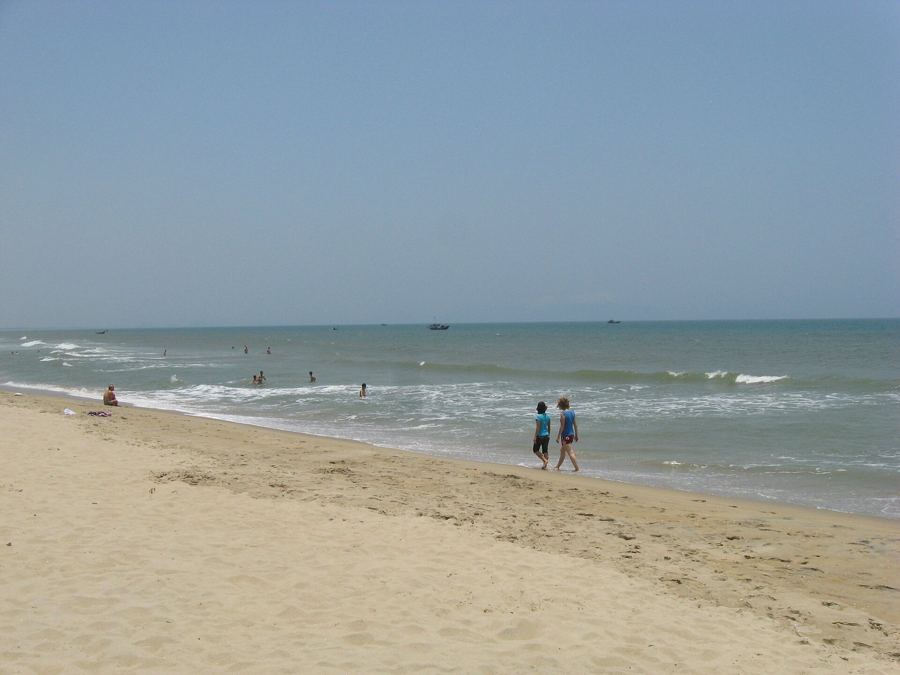
If you are torn between two stretches, remember how short the distances are. Moving from a beach near Hoi An to one in Da Nang takes under an hour, and a split stay shows both sides of the coast: the village sand and the old town in the evening, then the city's long beach and its restaurants. Many visitors find that the second base answers the questions the first one raised.
Think about how you will move around. Bicycles suit the flat coast between Hoi An and the beaches, and many places to stay lend them for free. Ride-hailing apps work well in Da Nang and around Hoi An, and taxis are easy to find. A scooter gives freedom but needs a valid licence and care on busy roads. If you plan to cover the Hai Van Pass, Lang Co or Tam Thanh, a car with a driver for the day is the simplest choice, and it can be arranged at short notice through most places to stay. A base near the road you will use most saves a surprising amount of time.
6. Quiet or lively?
The central stretch of An Bang and parts of My Khe are lively, with bars and music into the evening. The ends of the beaches, Ha My and the stretches south of Non Nuoc, are much quieter. Lang Co is quieter still. Light sleepers should look a street or two back from the busiest beachfronts.
Most visitors arrive at Da Nang's airport, which lies close to the city centre. From there, the city beaches are minutes away by taxi, Non Nuoc a little further, and the beaches near Hoi An roughly forty minutes to an hour, depending on traffic. Lang Co lies on the other side of the Hai Van tunnel, around an hour or more to the north. Factor the airport run into your choice, especially with an early flight home.
It is also worth thinking about splitting a stay. Many visitors spend a few nights by the sand near Hoi An and a few in Da Nang, or a night or two at Lang Co on the way to or from Hue. Each base shows a different side of the coast, and the distances are short enough to make moving easy.
Whatever you decide, look carefully at recent photos of the beach, check the season, and think about how you will spend your evenings. Those three things matter more than the view from the room.
7. Who is travelling?
Families with young children may prefer beaches with lifeguards, gentle slopes and shade nearby, and a base where meals and a pool are close. Couples looking for quiet may prefer the long empty stretches. Groups may want the city's choice of food and evenings. For a first trip, a base near An Bang, described in An Bang, is a good compromise.
Answer these honestly, and the choice of stretch usually becomes clear.