Dawn at the Man Thai fishing beach
At first light, round basket boats spin through the surf below the Son Tra peninsula, bringing the night's catch from the fishing fleet to a crowd waiting on the sand.
i
CEphoto, Uwe Aranas · CC BY-SA 3.0- From the old town
- About 30 km
- The water
- Lively
- Best months
- March to August
- Getting there
- North end of My Khe, by taxi
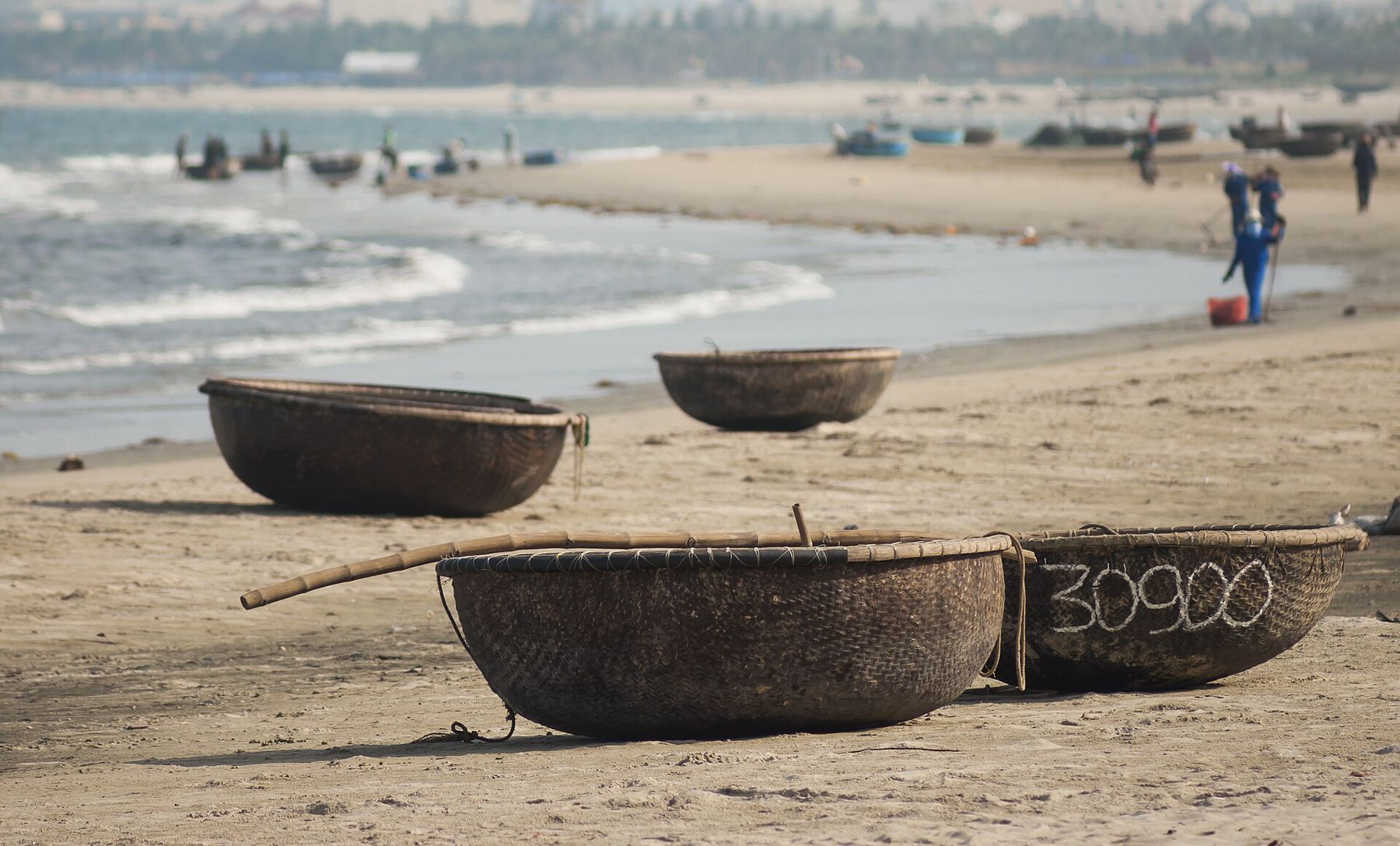
At the northern end of Da Nang's long city beach, where the sand runs towards the foot of the Son Tra peninsula, the beach changes character. Instead of swimmers and sunloungers, there are fishing boats anchored offshore, piles of nets on the sand, and dozens of round basket boats waiting on the beach. This is Man Thai, one of the fishing communities that have worked this shore for generations, and at dawn it is one of the most vivid sights on the coast.
Man Thai lies about 30 km by road from Hoi An's old town, at the north end of My Khe.
The basket boats
The round basket boat, called thung chai, is one of the most distinctive sights of central Vietnam's coast. Woven from split bamboo and sealed with resin or tar, it is light, cheap and tough, and it can be paddled through surf that would overturn a conventional boat. A fisherman stands or sits in it and paddles with a single oar, often spinning the boat in circles to steer.
i
CEphoto, Uwe Aranas · CC BY-SA 3.0At Man Thai, the basket boats are used to ferry men, nets and fish between the beach and the larger fishing boats anchored beyond the surf. The way they handle the waves is remarkable to watch.
The morning landing
The fishing boats go out at night and return around dawn. As they anchor offshore, the basket boats go out to meet them, and come back loaded with the catch: fish, squid, crabs and shellfish. On the beach, the catch is sorted, weighed and sold, often directly to traders and buyers waiting on the sand, in a lively informal market. Then, as the sun gets up, the activity dies down, the boats are pulled up, and the beach becomes quiet again.
To see it at its height, arrive around sunrise. The light at that hour, with the sun coming up over the sea behind the boats, is beautiful.
Watching with respect
This is a working beach, and the people here are earning a living, often under pressure of time. A few simple courtesies make a big difference:
- Stay out of the way of boats being launched, landed and carried.
- Ask before photographing people at close range, and accept a no.
- Do not touch nets, fish or equipment.
- Buy something if you are interested, but do not haggle aggressively.
- Keep children close: boats, ropes and wet sand make the beach busy and slippery.
Swimming nearby
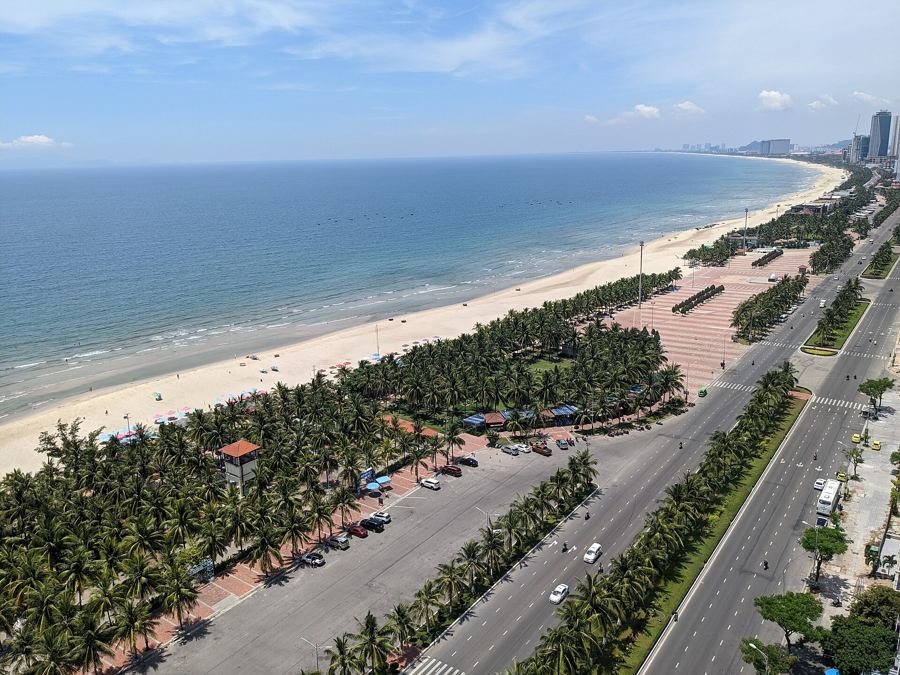
The fishing beach is not the place to swim: boats come and go, and there are ropes and anchors in the water. Walk a little south along the sand to the stretches with lifeguard posts and flags, where the early-morning swimmers gather. The swimming advice for the whole coast is in swimming safely on an open coast.
If you want to buy fish, go with someone who knows the market, or simply watch: the traders are fast and the prices are set for regulars, not visitors.
Wear sandals you do not mind getting wet and sandy, since the landing happens right at the busy, wet edge of the water. Bring small change if you plan to buy anything, and a little patience: the market moves fast and visitors are rarely its priority.
Calm and rough months
The fishing fleet's rhythm follows the sea. In the calm months, from roughly spring to late summer, boats go out most nights, and the dawn landing is a daily event. In the rough months, from about September into the early winter, storms and big swells keep the boats in port for days at a time, and the beach can be quiet. Typhoon warnings bring the whole fleet in.
The way they handle the waves is remarkable to watch.
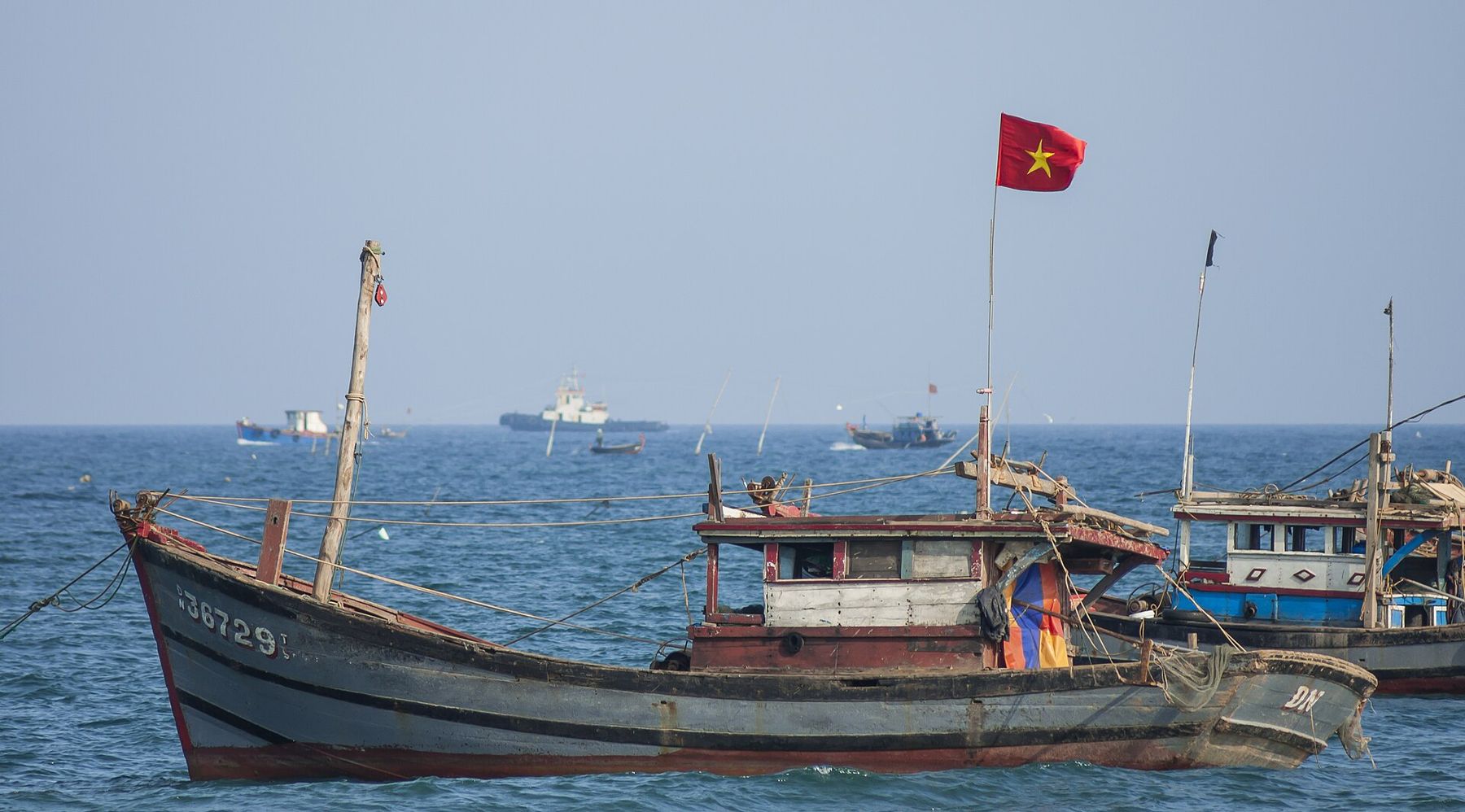
The fishing fleet here is made up of wooden boats painted in bright colours, often blue and red, with eyes painted on the bows, a tradition said to help the boats see their way and ward off danger. The boats are anchored offshore because there is no harbour on this open beach, which is why the basket boats are so important: they are the link between the fleet and the shore. Watching the whole system work, boats, baskets, people and fish, gives a real sense of how this coast has made its living for centuries.
The fish market that forms on the sand is informal and moves quickly. Prices are set by quick bargaining among traders, and much of the catch is gone to restaurants and markets in the city before most visitors are awake.
Basket boats elsewhere on the coast
Basket boats are found all along this coast, from Lang Co in the north to the beaches near Hoi An. At Non Nuoc, under the Marble Mountains, they lie on the sand in rows; at An Bang and Cua Dai they are used by fishermen working close to shore; and in the water coconut forest at Cam Thanh, near Hoi An, they have been turned into a way of exploring the river channels, described in Cam Thanh: basket boats in the nipa palms.
Watching the dawn landing at Man Thai, then walking south along My Khe as the swimmers come out, makes a fine early start to a day in Da Nang. By breakfast time, the beach has changed from a workplace to a playground, and the boats are resting on the sand until the next night.